dFC: Digital Flow Cytometry
Absolute Quantitation with Single-Molecule Counting
from biomolecules to biological nanoparticles
Digital Flow Cytometry (dFC)
Flow cytometry forbiological moleculesand nanoparticles
From affinity profiling and QC of therapeutic and research antibodies to multiparameter characterization of biological nanoparticles such as EVs, LNPs, and viral vectors
Antibodies
EVs
LNPs
Viral vectors
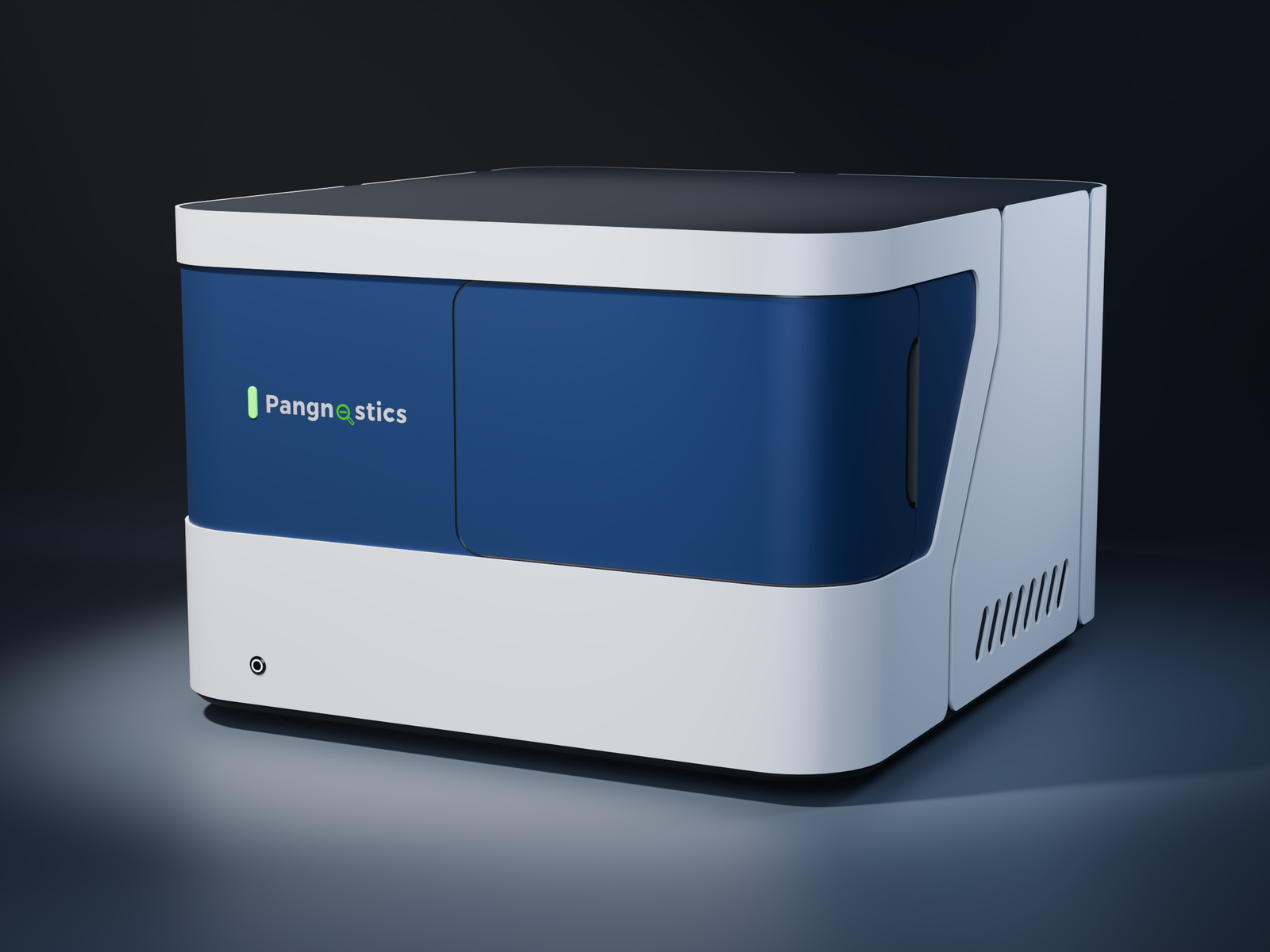
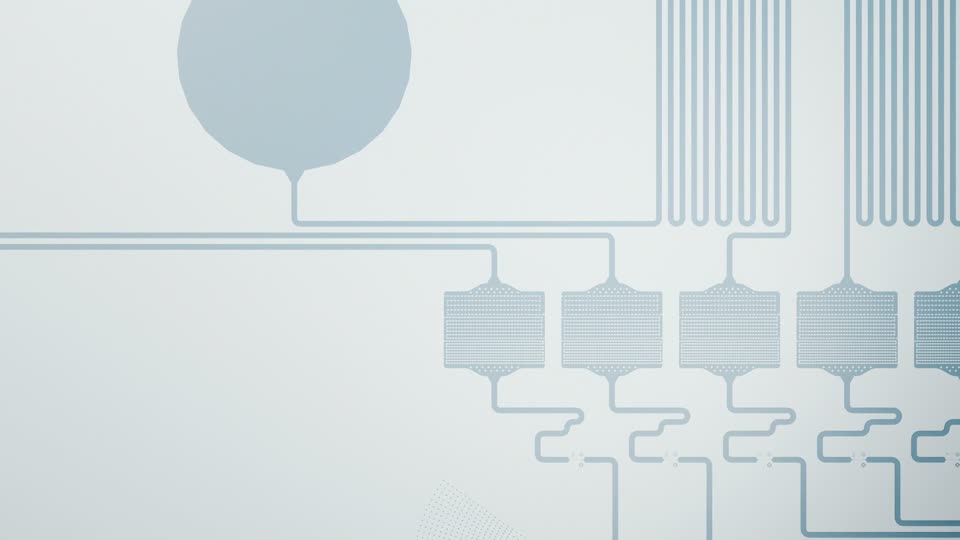
Pangnostics’ PanViewTM digital flow cytometer (dFC) employs planar microfluidics to enable 100% single-fluorophore detection at high particle throughput, enabling greater sensitivity and capabilities than conventional macrofluidic flow cytometers.
THE PARADIGM SHIFT
Turning flow cytometry upside down.
Conventional nanoscale flow cytometers use a top-down approach in which technologies developed for cells were adapted for nanoparticles.Pangnostics takes a bottom-up approach that starts with single-molecule detection (SMD).
CONVENTIONAL FLOW CYTOMETRY
- Macrofluidic sheath-flow systems
- Insufficient sensitivity to detect every fluorophore
- Cannot detect single molecules or small EVs
- Quantitation requires external calibration
PANGNOSTICS dFC
- Planar microfluidic system
- 100% single-fluorophore sensitivity
- Detects every fluorescent biomolecule or particle
- Absolute quantitation via single-molecule counting
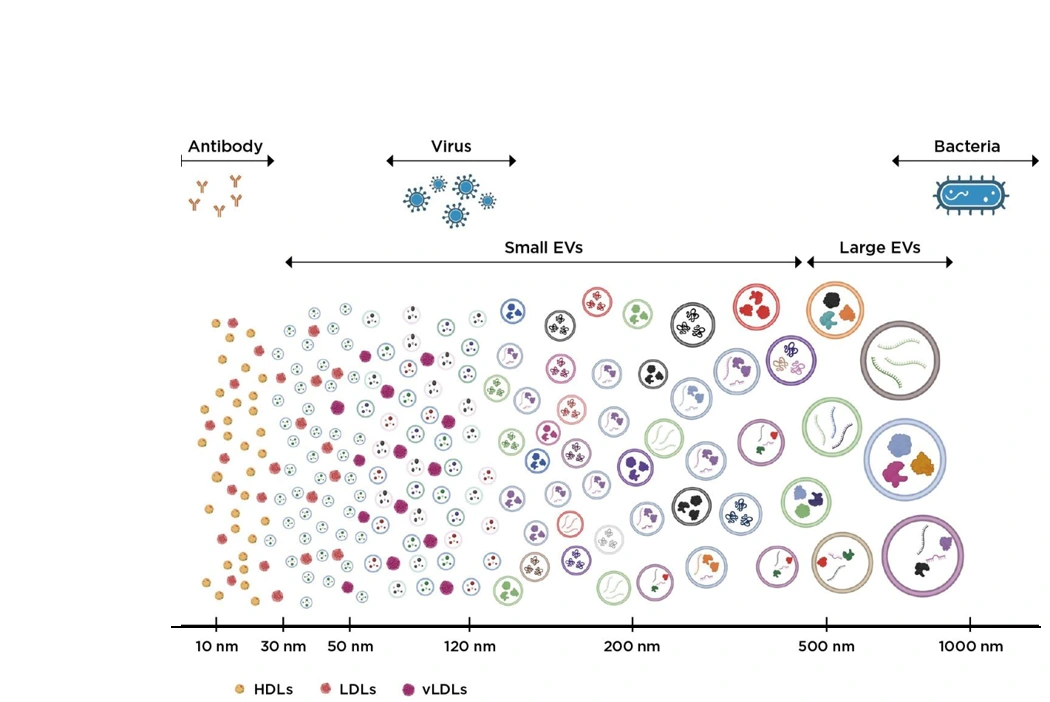
LOD of current nanoscale
flow cytometers
flow cytometers
LOD of dFC
(100% fluorophore detection)
(100% fluorophore detection)
HOW dFC WORKS
Making every molecule count
Watch how individual counts become a distribution.
Because fluorophore emission is stochastic, the detected photon bursts can vary widely from one fluorophore to another. The high sensitivity of dFC ensures the detection of even the dimmest fluorophore population.
WHY dFC
Unparalleled sensitivity.
12-color detection.
Absolute quantitation
Count fluorescent molecules and particles directly, without external calibration
Single-molecule sensitivity
Detect biological molecules and nanoparticles that conventional flow cytometers miss
Deep phenotyping of EVs and other biological nanoparticles
Four excitation lasers and 12 detection channels enable detection of up to 12 biomarkers, corresponding to ~4000 possible EV subpopulations.
High throughput
The high spatial resolution of dFC minimizes coincident detection (swarming), improving the accuracy of quantitation and enabling high particle throughput, with data acquisition at 10 kHz.
Applications
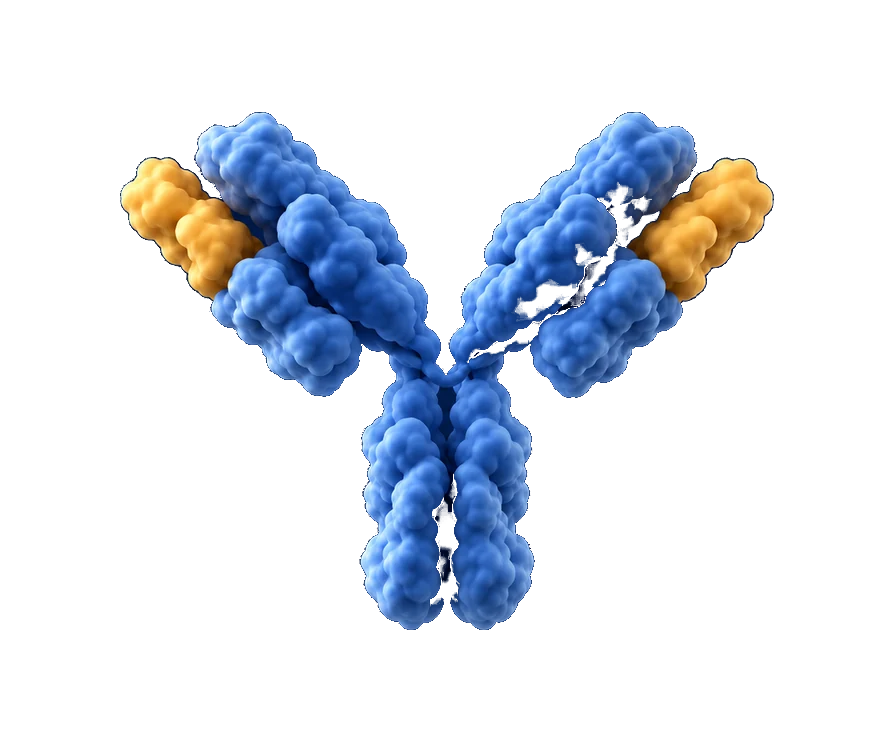
Antibody QC
Absolute concentrations, F:P, KD, aggregate detection
Learn more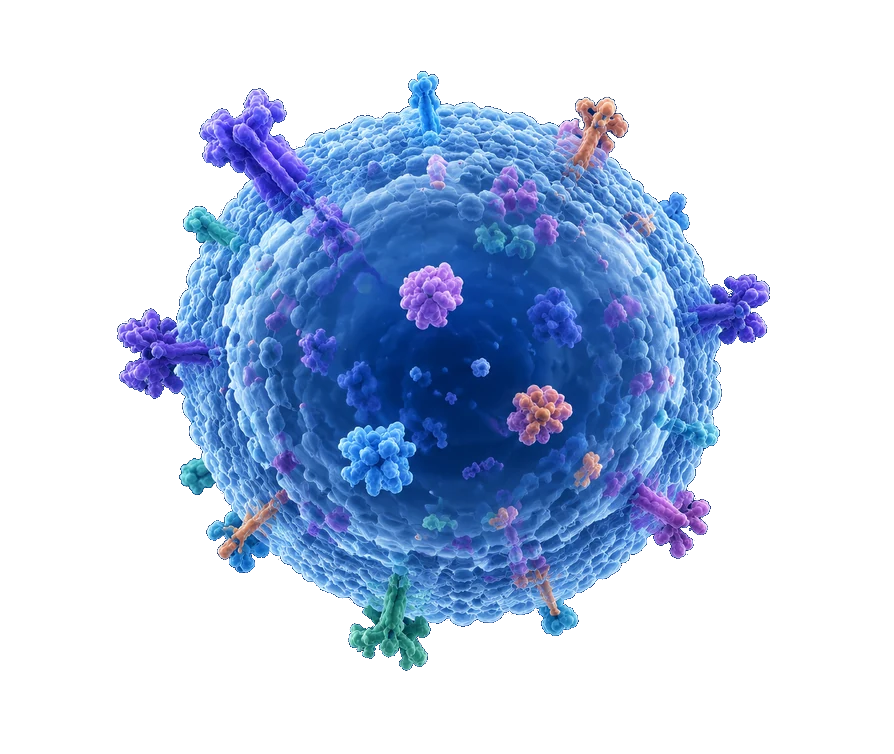
EV analysis
Deep phenotyping, biomarker copy numbers, subpopulation concentrations
Learn more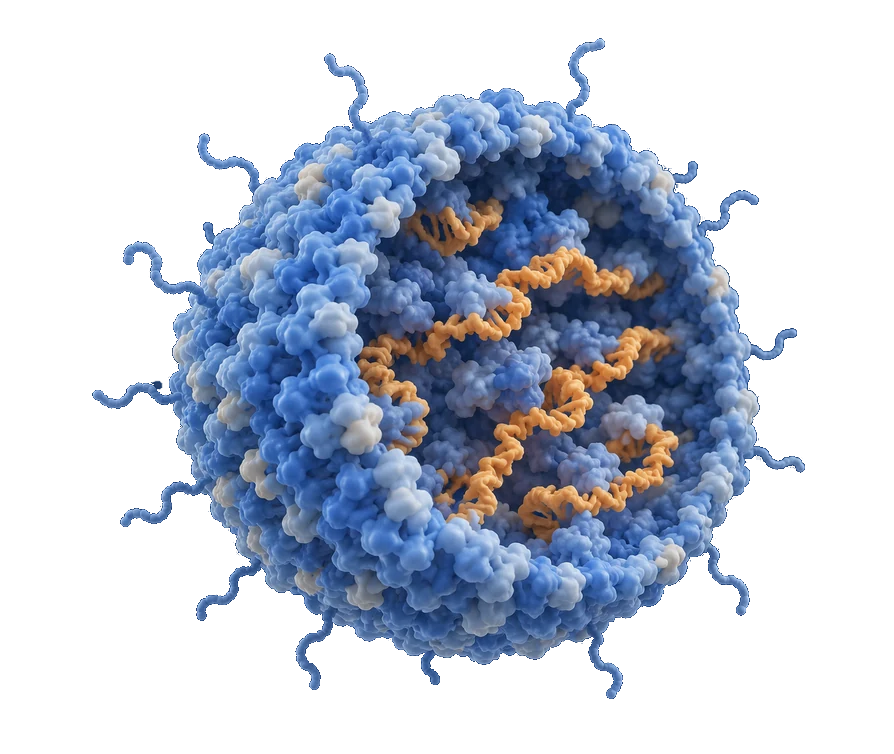
Lipid nanoparticles
Encapsulation efficiency and payload-positive fraction
Coming soon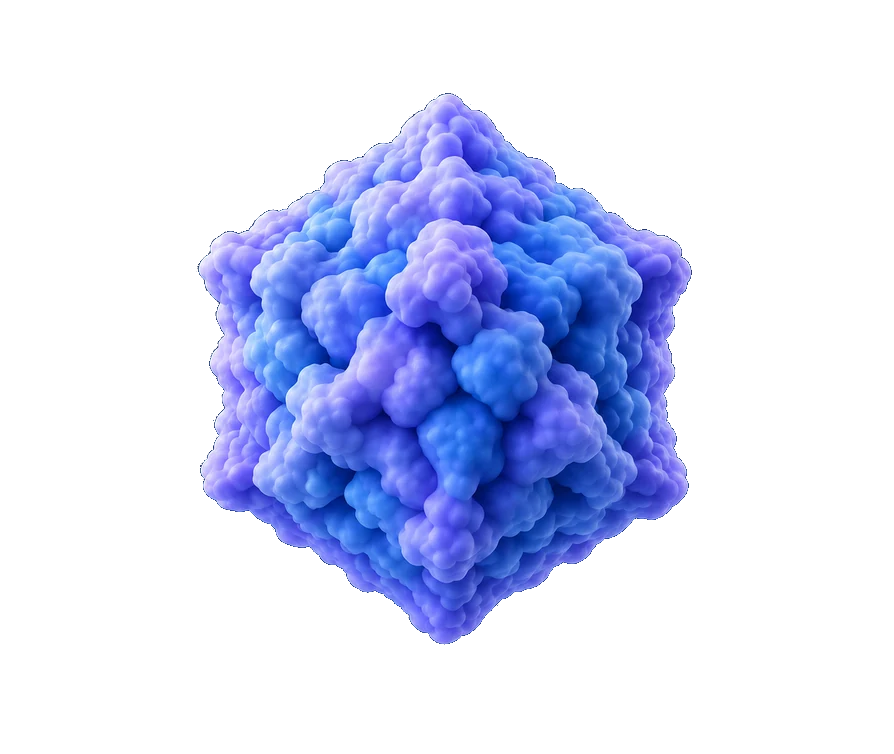
Viral vectors (e.g., AAVs)
Full/empty capsid ratio and genome-containing particle fraction
Coming soonSINGLE-MOLECULE ANALYSIS
Antibody analysis by dFC:
Absolute antibody concentrations
Direct, quantitative measurements
Fluorophore-to-protein ratio (F:P) (degree-of-labeling)
QC of antibody-dye conjugates used in research
Binding affinity (KD)
Rapid screening of labeled and unlabeled therapeutic and research antibodies
Aggregate detection
For labeled and unlabeled therapeutic and research antibodies
Watch an overview of
antibody analysis
SINGLE-PARTICLE ANALYSIS
Single-EV analysis by dFC:
- 12-channel biomarker analysisSimultaneous detection of multiple EV surface and cargo markers.
- EV phenotypingIdentify and characterize distinct EV subpopulations.
- Absolute concentrations of EV subpopulationsDirect, quantitative measurements.
- Absolute quantitation of biomarker copy numbersSingle-molecule sensitivity enables copy number measurements by digital deconvolution.
- EV sizing based on a membrane dyeDetermine EV size distributions using a lipid membrane dye.
SINGLE-PARTICLE ANALYSIS
Phenotyping individual EVs
With 4 excitation lasers and 12 color channels, dFC can unmask the biological heterogeneity of biomedical nanoparticles such as EVs in a single experiment—down to the smallest nanoparticle.


SINGLE-PARTICLE ANALYSIS
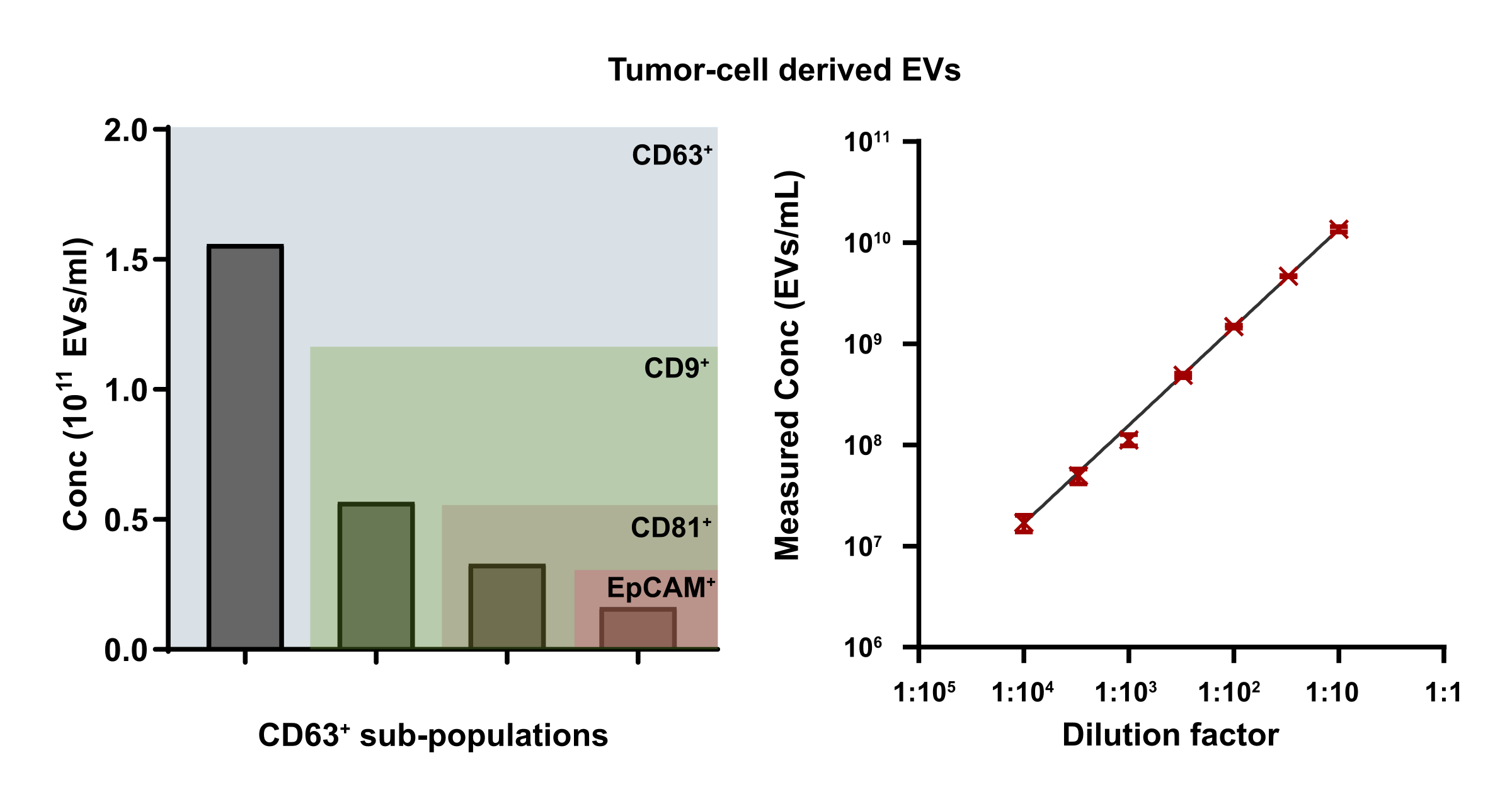
Absolute concentration measurements
Direct counting of fluorescent antibodies or EV subpopulations
By detecting every molecule that flows through the channel, dFC achieves absolute quantitation of the concentration of fluorescently-labeled biomolecules or EV subpopulations.
SINGLE-PARTICLE ANALYSIS
Absolute quantitation of biomarkers
The ultra-high sensitivity of dFC enables single-molecule counting of protein and nucleic acid biomarker copy numbers associated with each EV—without external calibration.

A CLOSER LOOK
Follow an EV through the dFC PanFlow™ Chip.